Introduction
Company liquidation in the UAE involves more than simply stopping business activities. It is a structured legal process that must be completed correctly to avoid fines, delays, or future liabilities. Having a clear checklist helps businesses manage each stage of liquidation efficiently and ensures full compliance with UAE regulations.
Business Overview
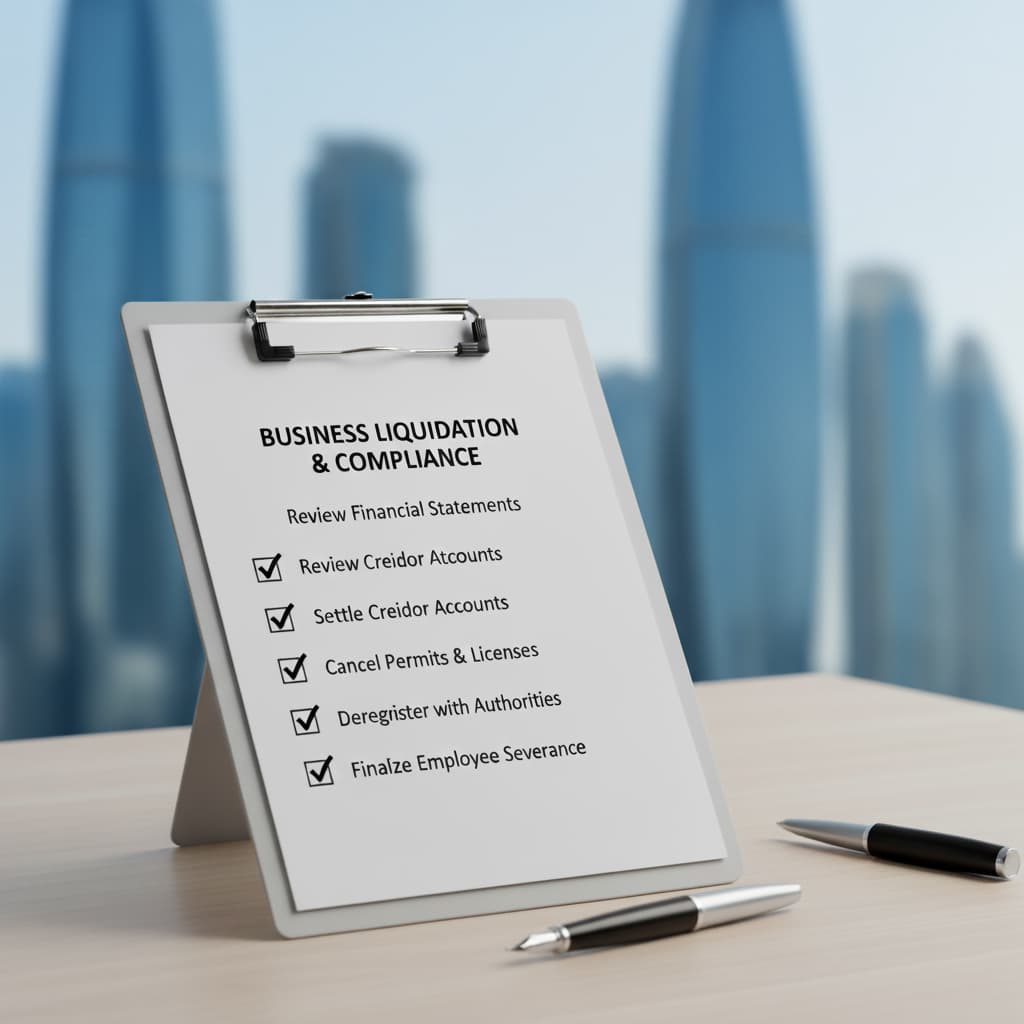
A UAE company liquidation checklist covers all critical steps required to close a business legally. The process typically begins with passing a board resolution and appointing an approved liquidator. This is followed by publishing liquidation notices, preparing final audit reports, cancelling visas, and obtaining clearance from multiple government departments.
Whether the company is Mainland or Freezone, missing even one step can delay deregistration or result in penalties.
Essential Company Liquidation Checklist
Businesses must ensure the following steps are completed:
- Pass a board resolution approving liquidation
- Appoint a registered liquidator
- Cancel employee and investor visas
- Prepare and submit final audit reports
- Publish liquidation notice in local newspapers (if required)
- Clear bank accounts, utilities, and outstanding liabilities
- Obtain clearances from immigration, labour, and licensing authorities
- Cancel the trade license and complete final deregistration
Key Requirements
Accurate documentation is critical. Companies must prepare financial statements, settlement confirmations, clearance letters, and cancellation certificates before applying for final deregistration.
Additional Information
ADL Business Solutions manages the entire liquidation checklist, ensuring every document, approval, and clearance is completed accurately and on time. Learn more about our 👉 Company Liquidation Services in Dubai for professional, end-to-end support.
Conclusion
Using a structured checklist ensures company liquidation in the UAE is quick, compliant, and hassle-free. With proper planning and expert guidance, businesses can close operations smoothly and avoid unnecessary risks.